
Floating in the Deep End
Patti Davis
Reminds caregivers to stay open and not be trapped by past decisions or judgments.
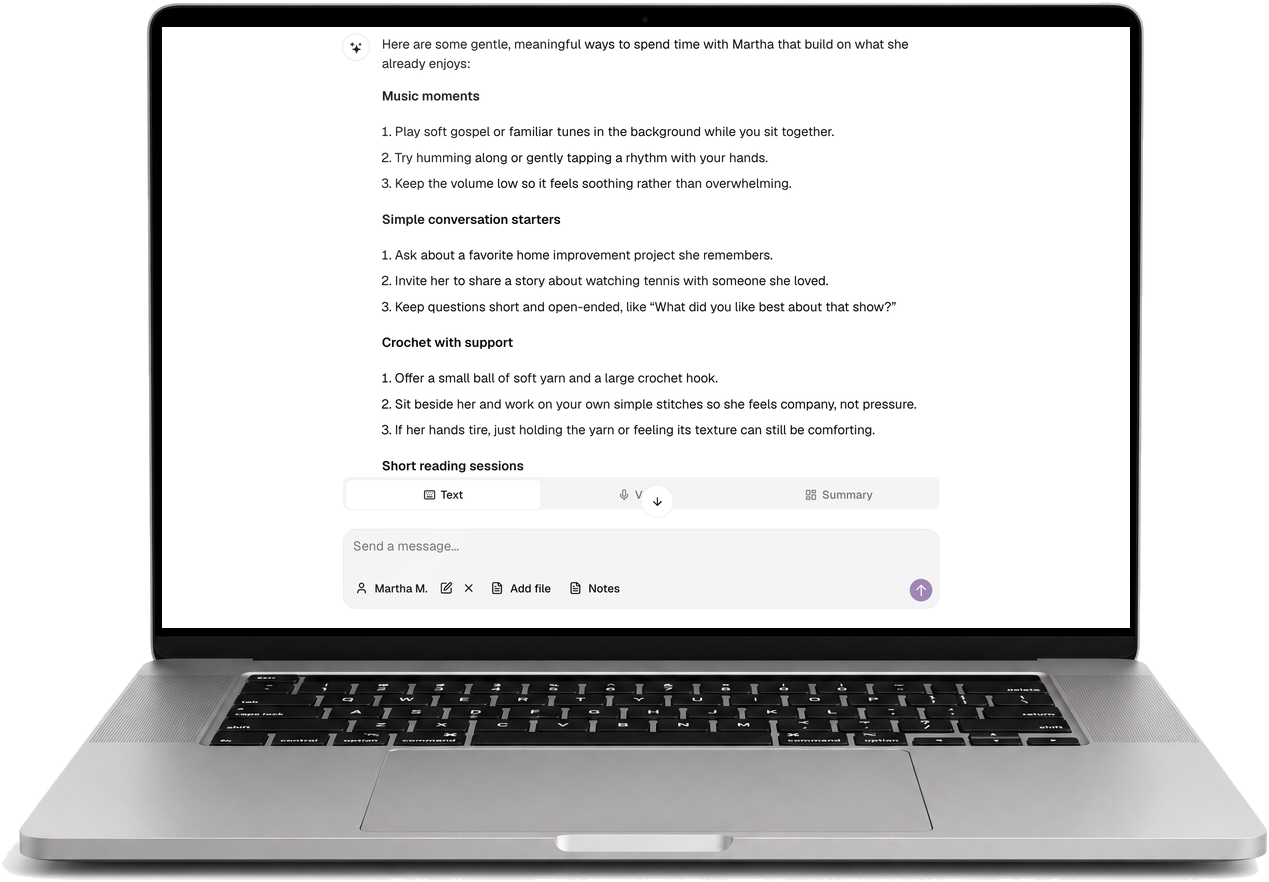
DemiHelp is an interactive chat that gives you personalized, in-the-moment guidance for your care recipient — strategies, activities, and answers, in any language.

Chat features
Quick, in-the-moment answers when a question comes up about your loved one's care.
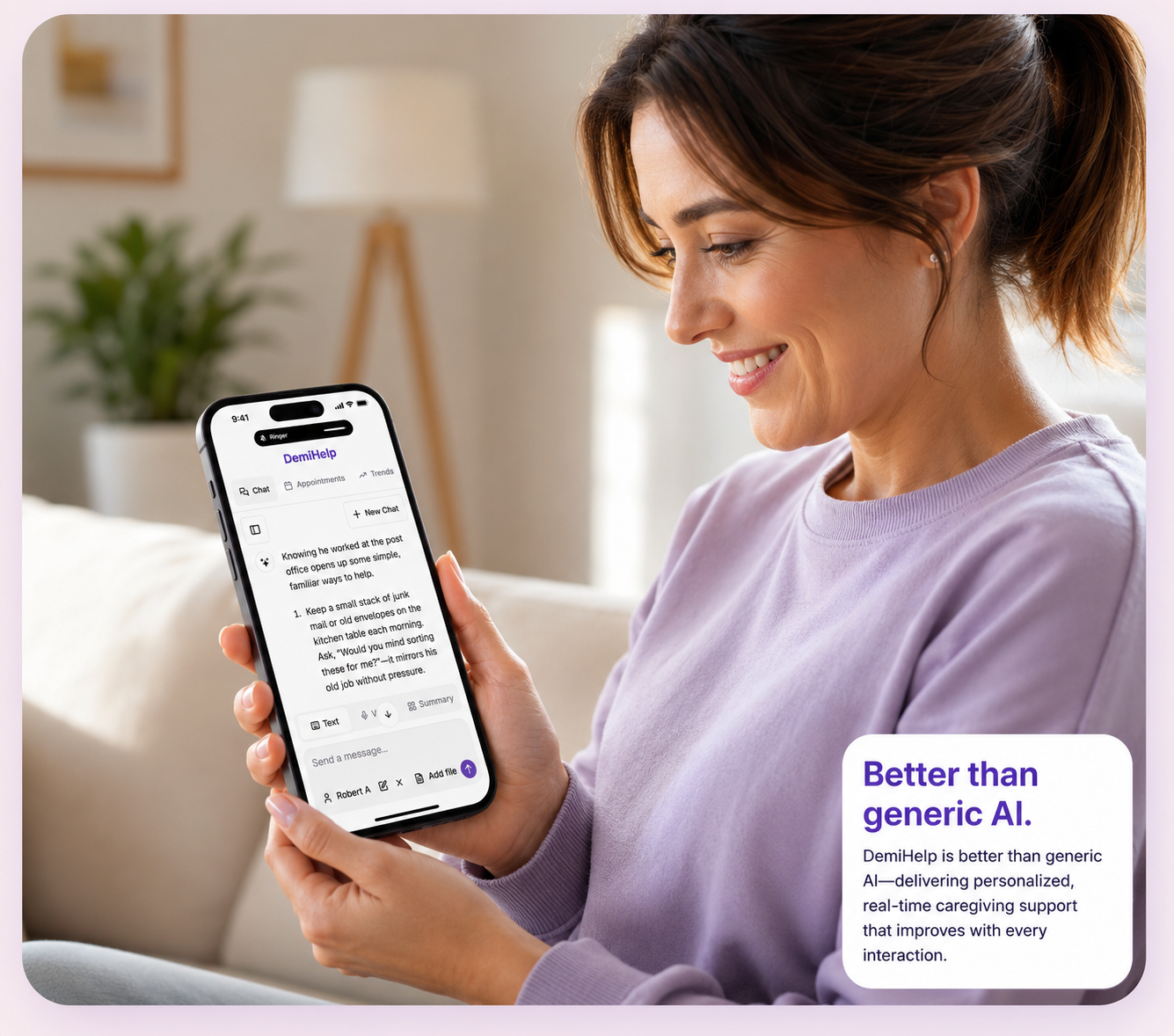
Share a care plan or survey and receive responses tailored to that specific person.
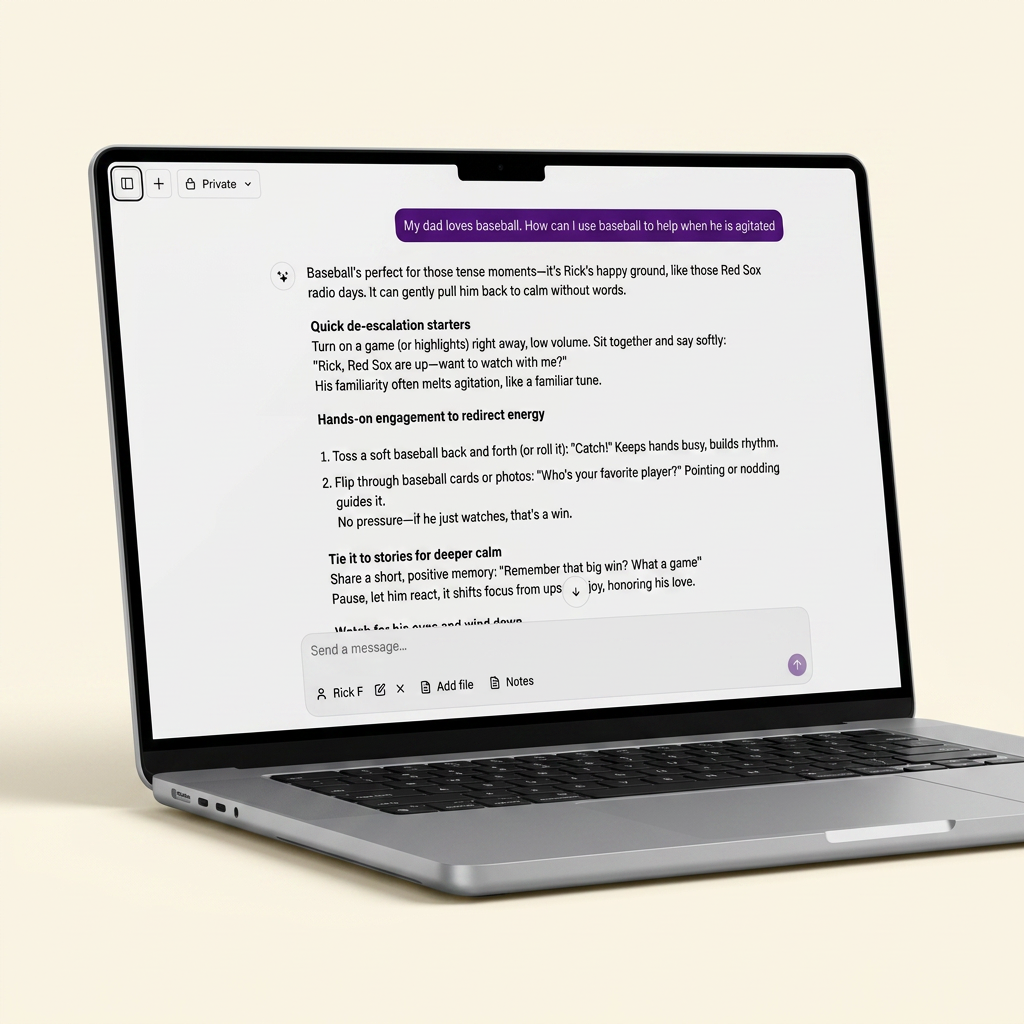
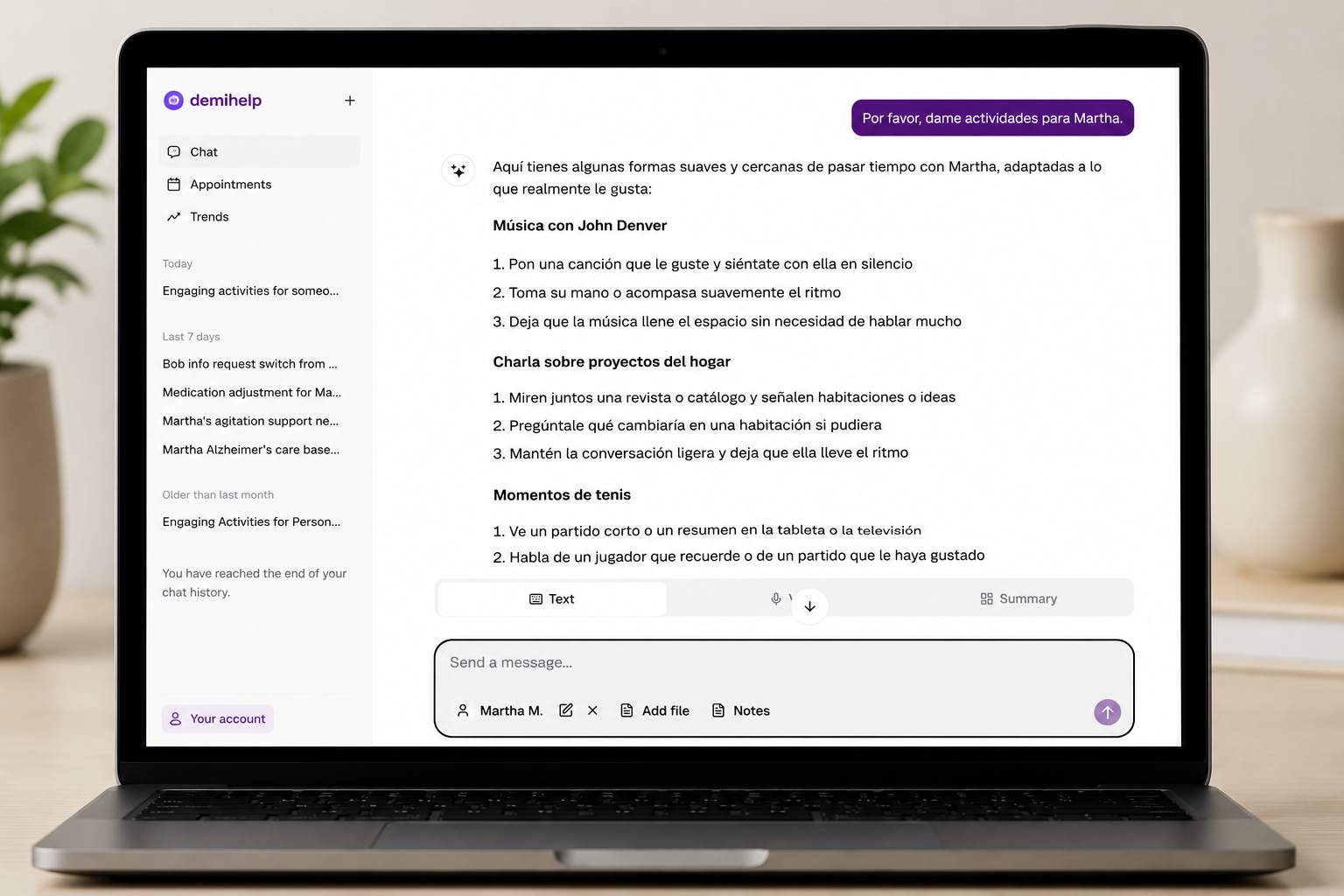
Here, a daughter asks how her dad's love for baseball might help her care for him when he is agitated.
Suggested environments, communication strategies, and activities — useful for substitute caregivers too.

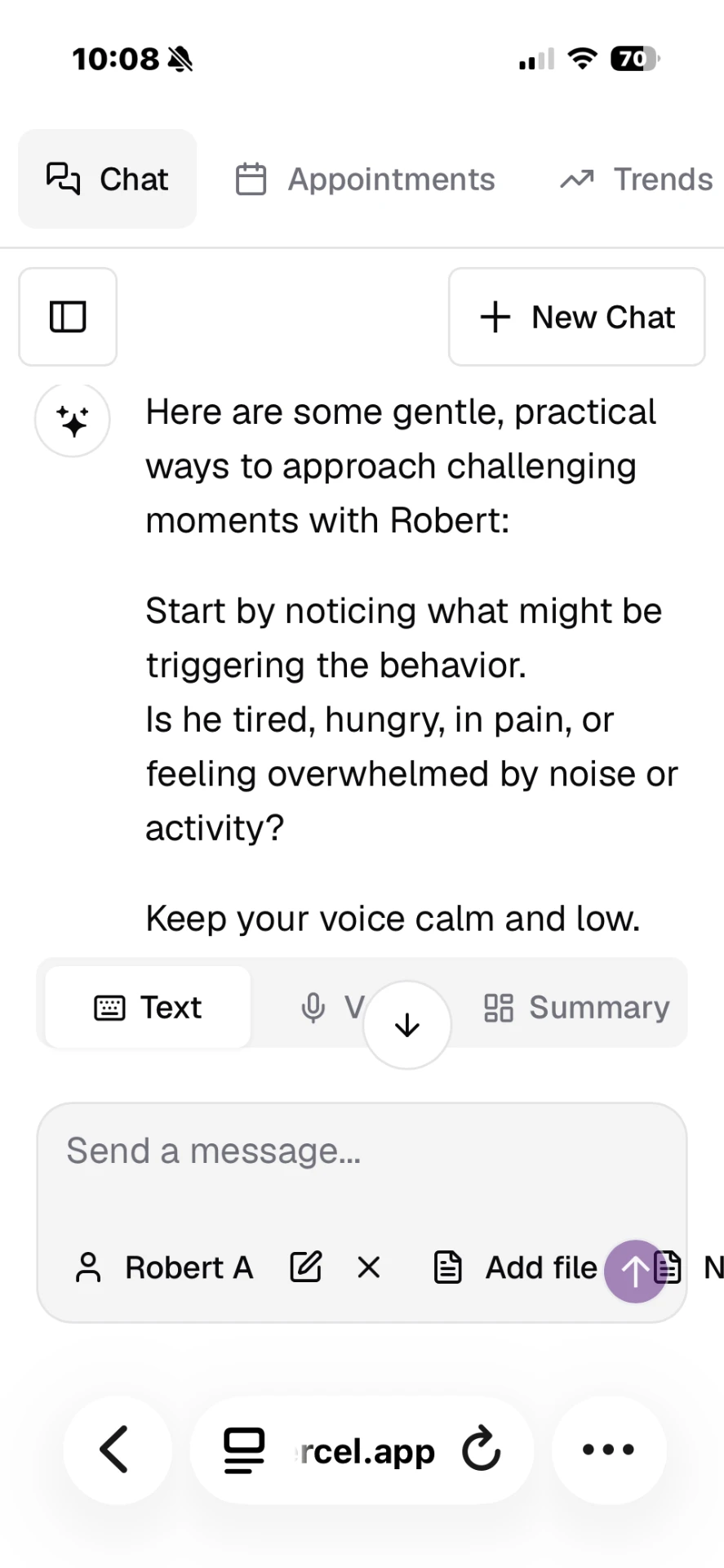
of people with dementia experience behavioral or psychological symptoms — tailored environments, communication, and activities are recommended as the first-line response.
Alzheimer's Association · International Psychogeriatric Association
Chat in English, Spanish, or your native language. DemiHelp adapts to you.
U.S. residents speak a language other than English at home — and people with dementia often revert to their first language as the disease progresses, making care in their native tongue essential.
U.S. Census Bureau · Alzheimer's Society
Track progress and leave notes that family and other caregivers can read.
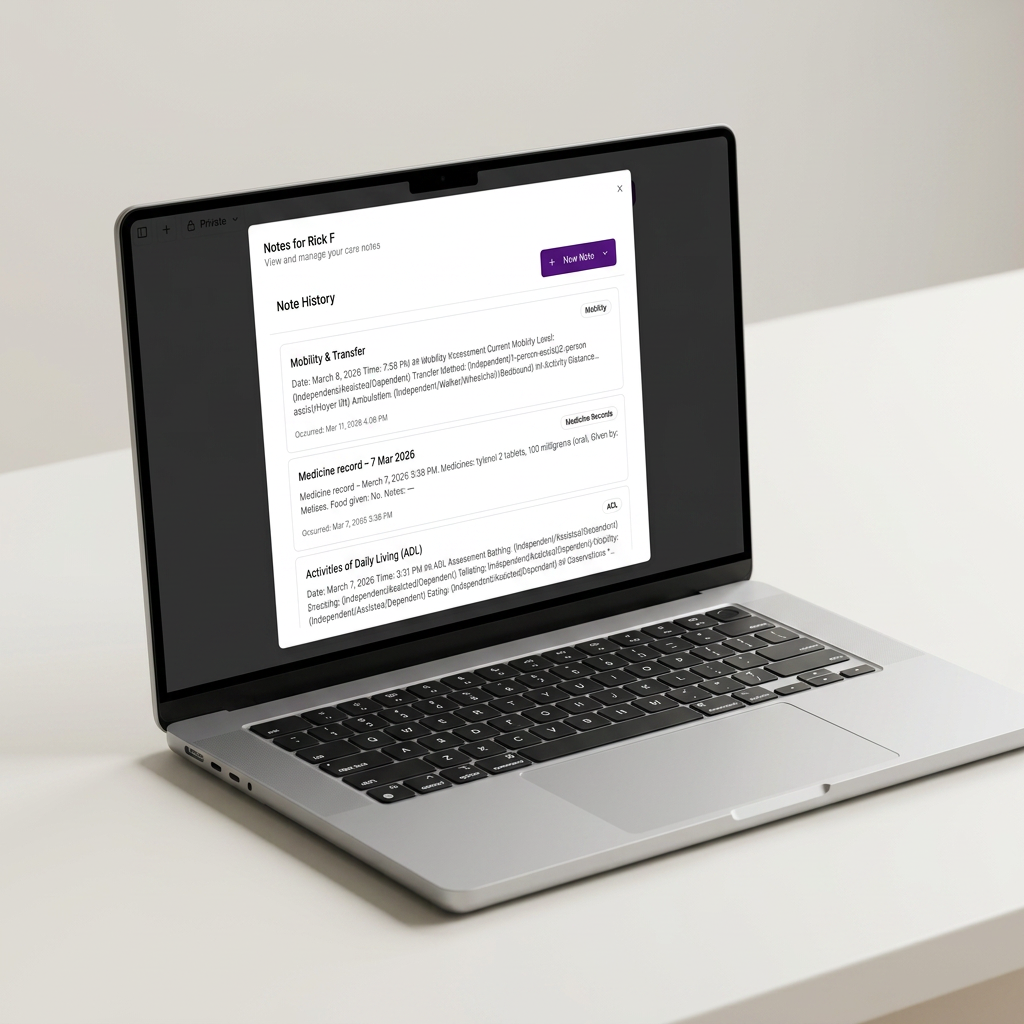
Caregiver notes connect providers, families, and healthcare teams—ensuring continuity, supporting compliance, and improving patient outcomes.
Amesite
Stimulating activities, communication tips, and ways to gently manage difficult behaviors.

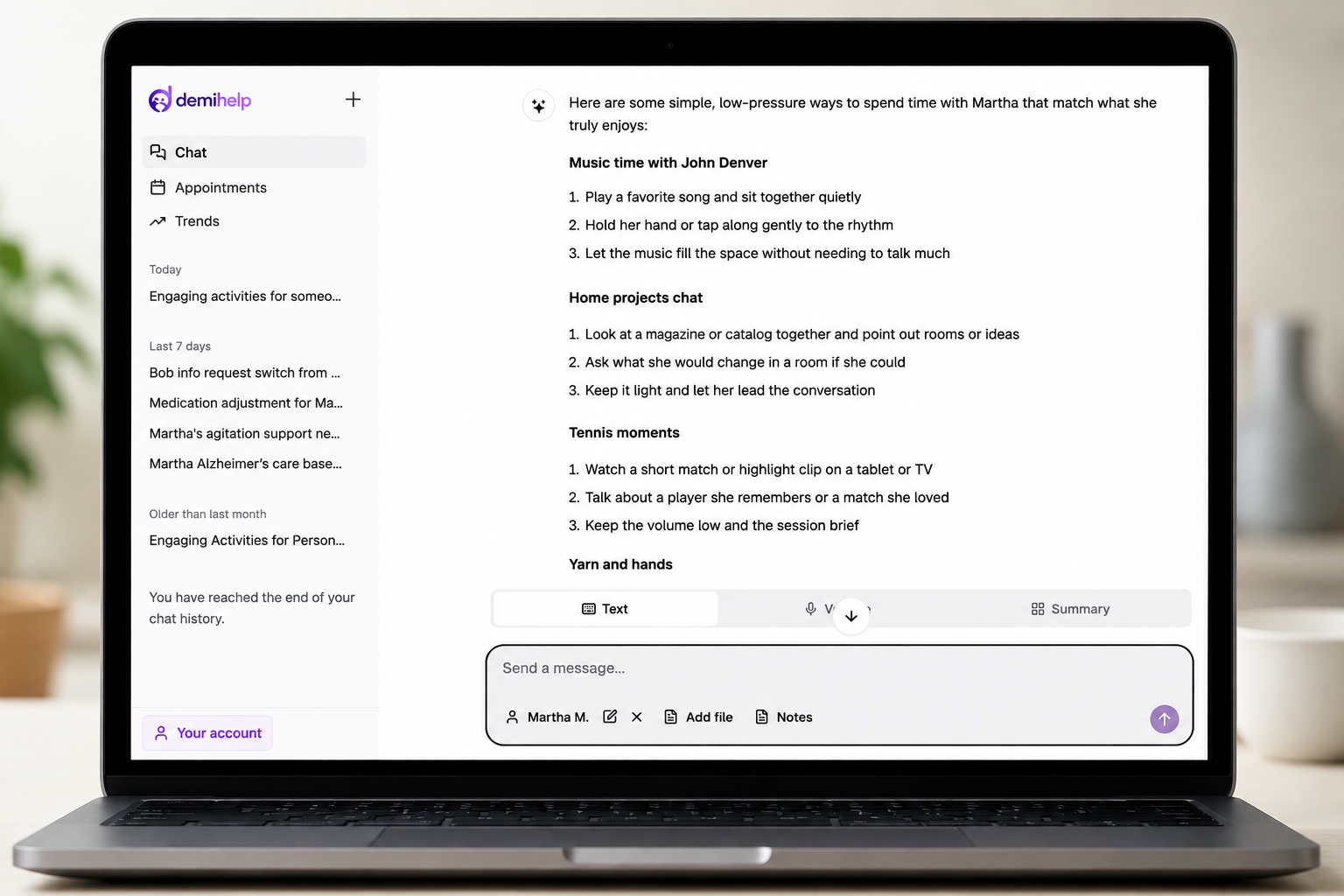
After receiving tailored strategies for their care recipient, caregivers can track what works in the notes feature.
Capture important observations the moment they happen—just speak. No typing required.

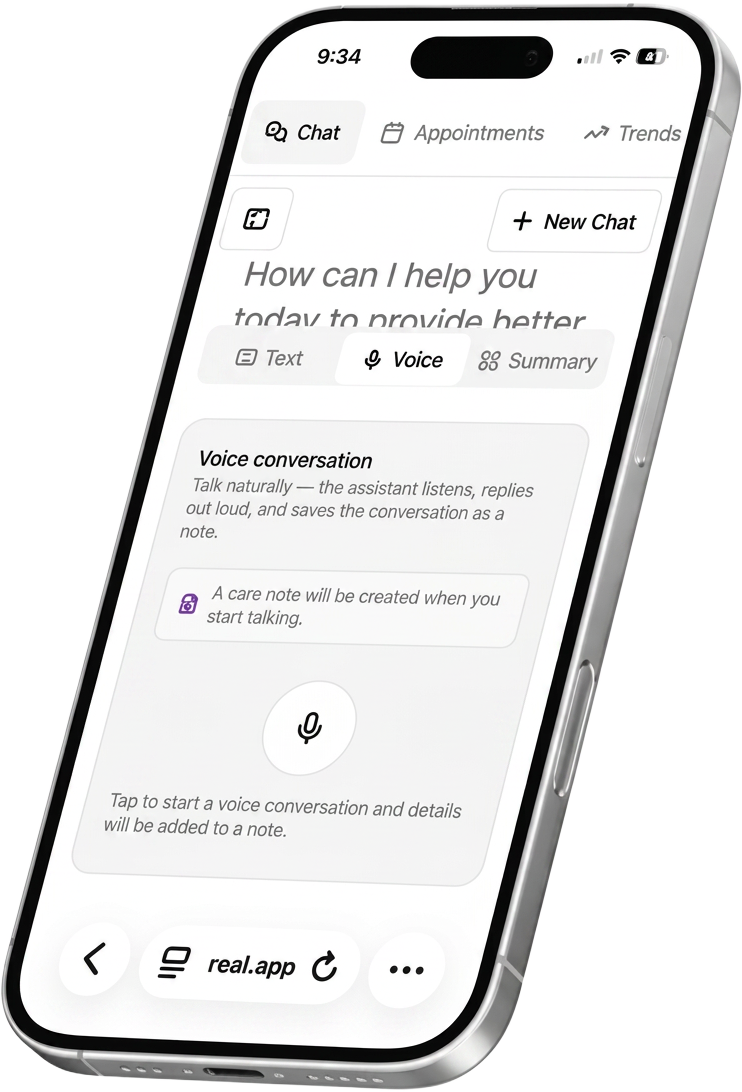
Voice notes let caregivers capture observations quickly when hands are full or the situation is stressful.
Need to remember what happened over the past few days? DemiHelp automatically summarizes your recent care notes, helping you quickly review changes and stay informed.
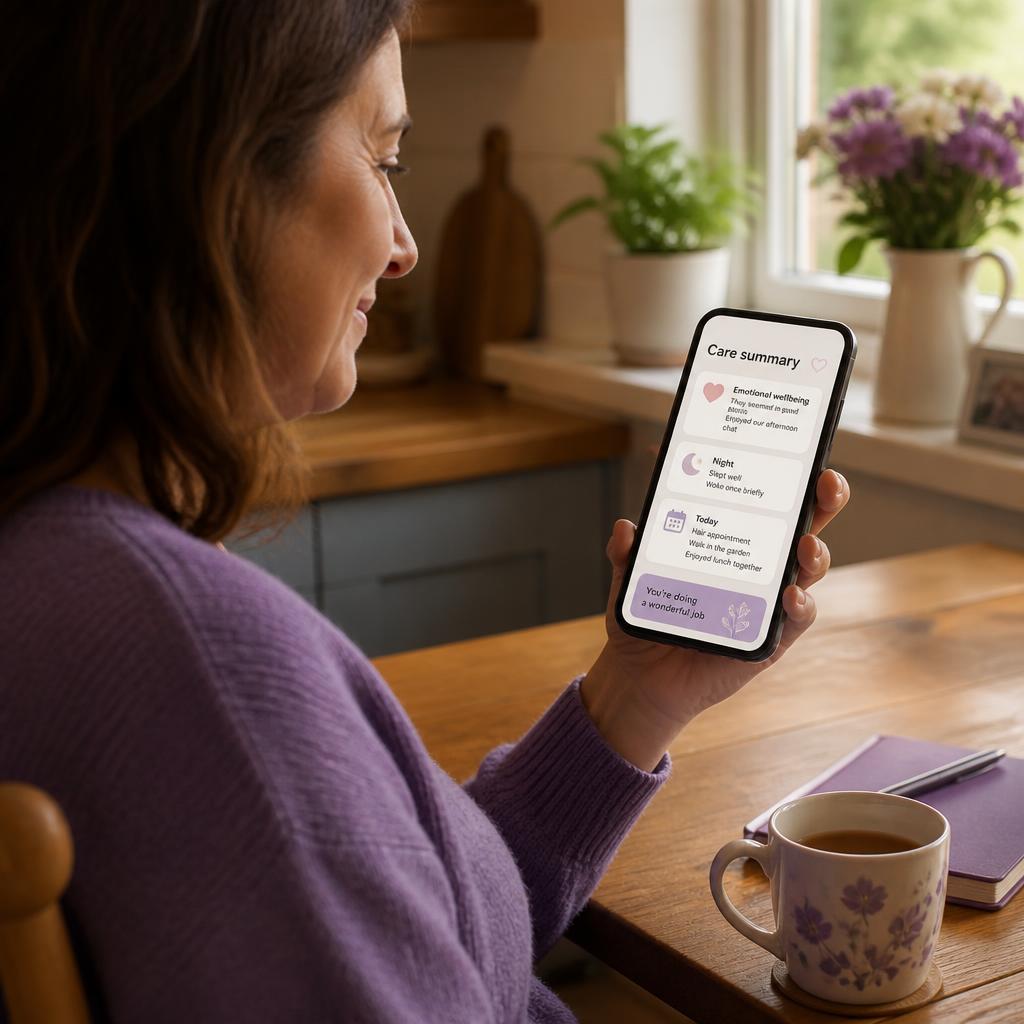
Summaries help caregivers recall recent details and prepare for conversations with family and healthcare providers.
See patterns in mood, sleep, behaviors, and symptoms over time. Small changes can be easy to miss day to day, but recognizing trends can help you make more informed caregiving decisions and have more meaningful conversations with family members and healthcare providers.
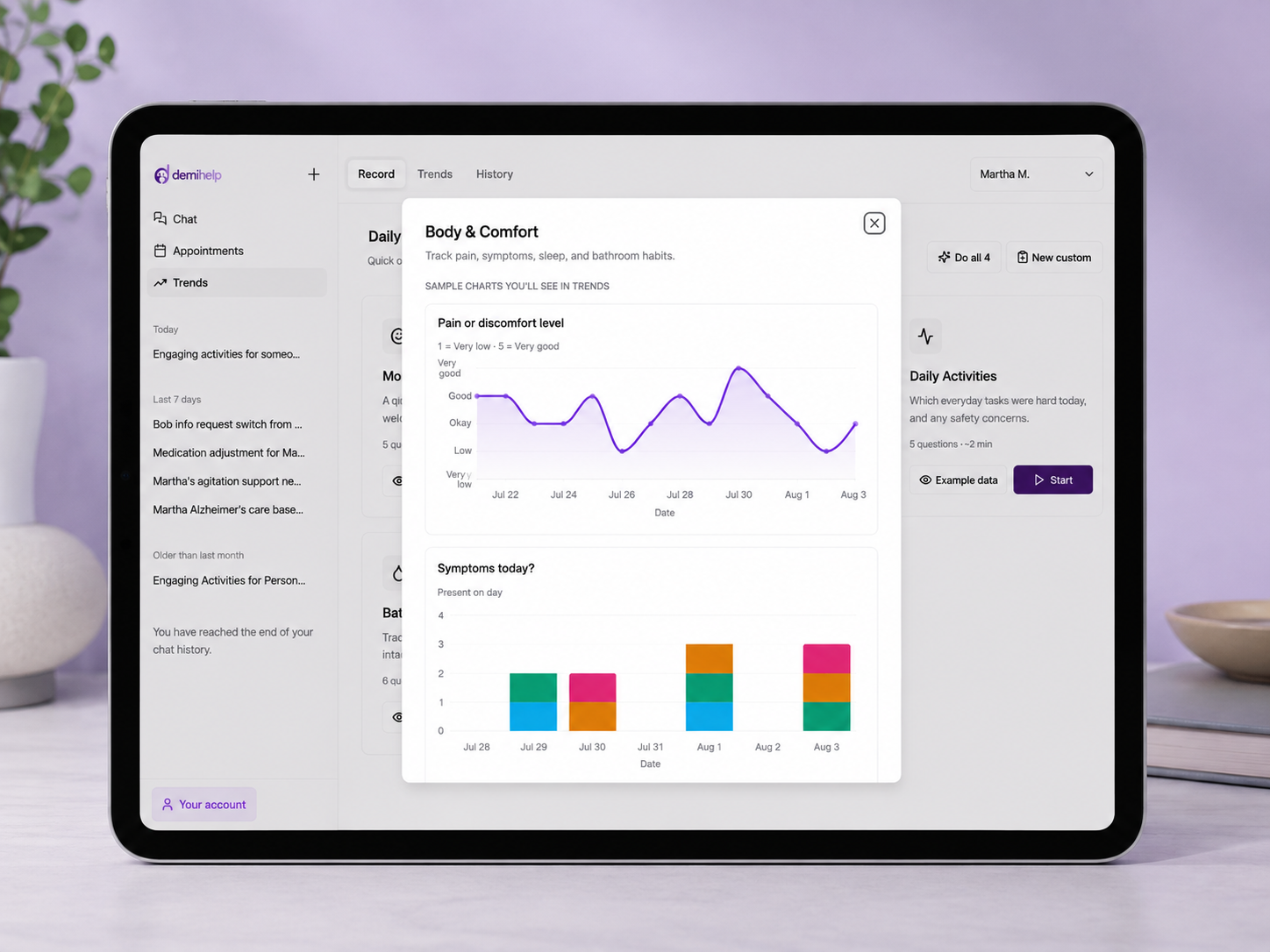
Tracking trends over time helps caregivers notice small changes early and communicate them more clearly.
Generate personalized music, games and storyboards to support memory & meaningful connection.
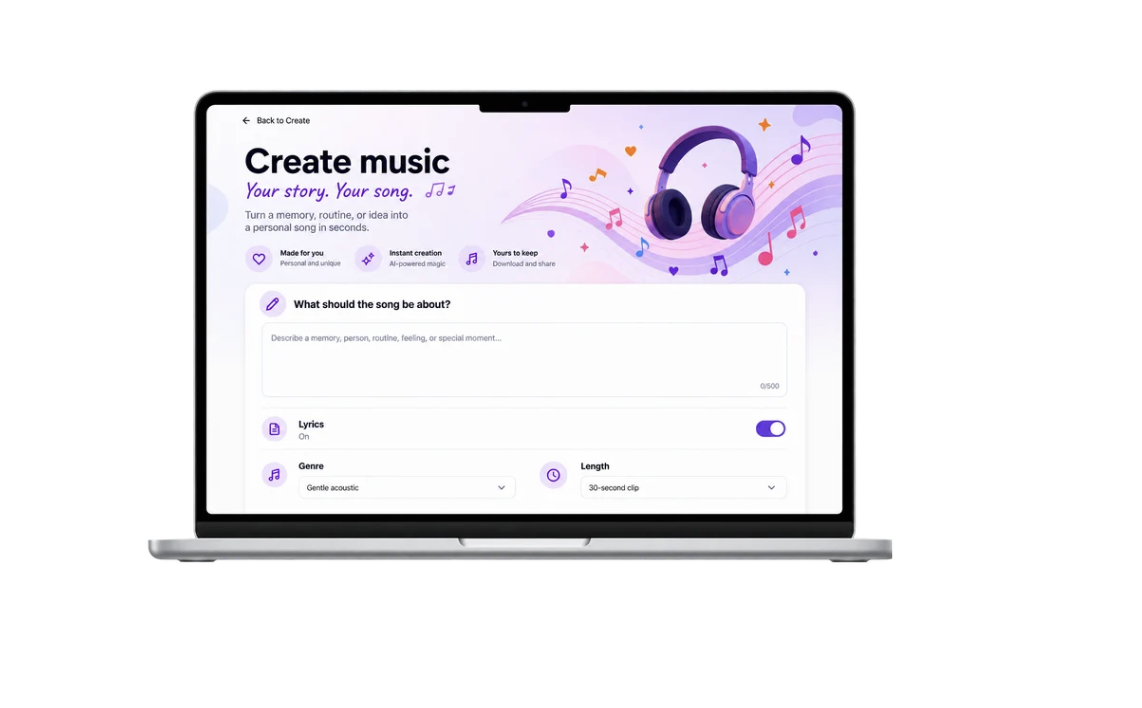
Turn treasured memories into personalized songs in any genre, create visual storyboards that make everyday tasks like hand washing easier to follow, or create games inspired by their interests. Each experience is designed to encourage engagement and preserve connection as dementia progresses.
Inspire purpose and enthusiasm by playing games.
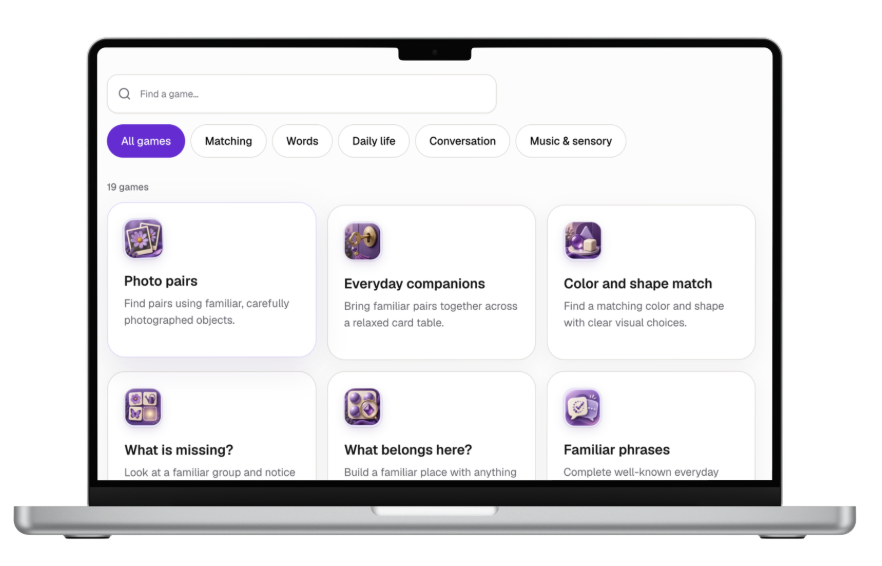
• Stimulate conversation with story prompts • Reveal beautiful scenes one square at a time • Match shapes and colors
Read or watch videos on common dementia-care situations.
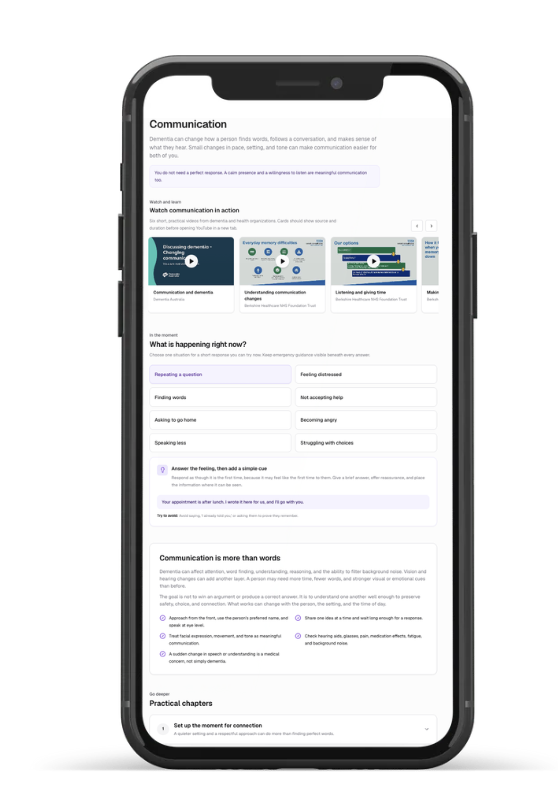
• Watch and learn from targeted videos. • Choose specific scenarios for a quick response. • Get fast tips and strategies.
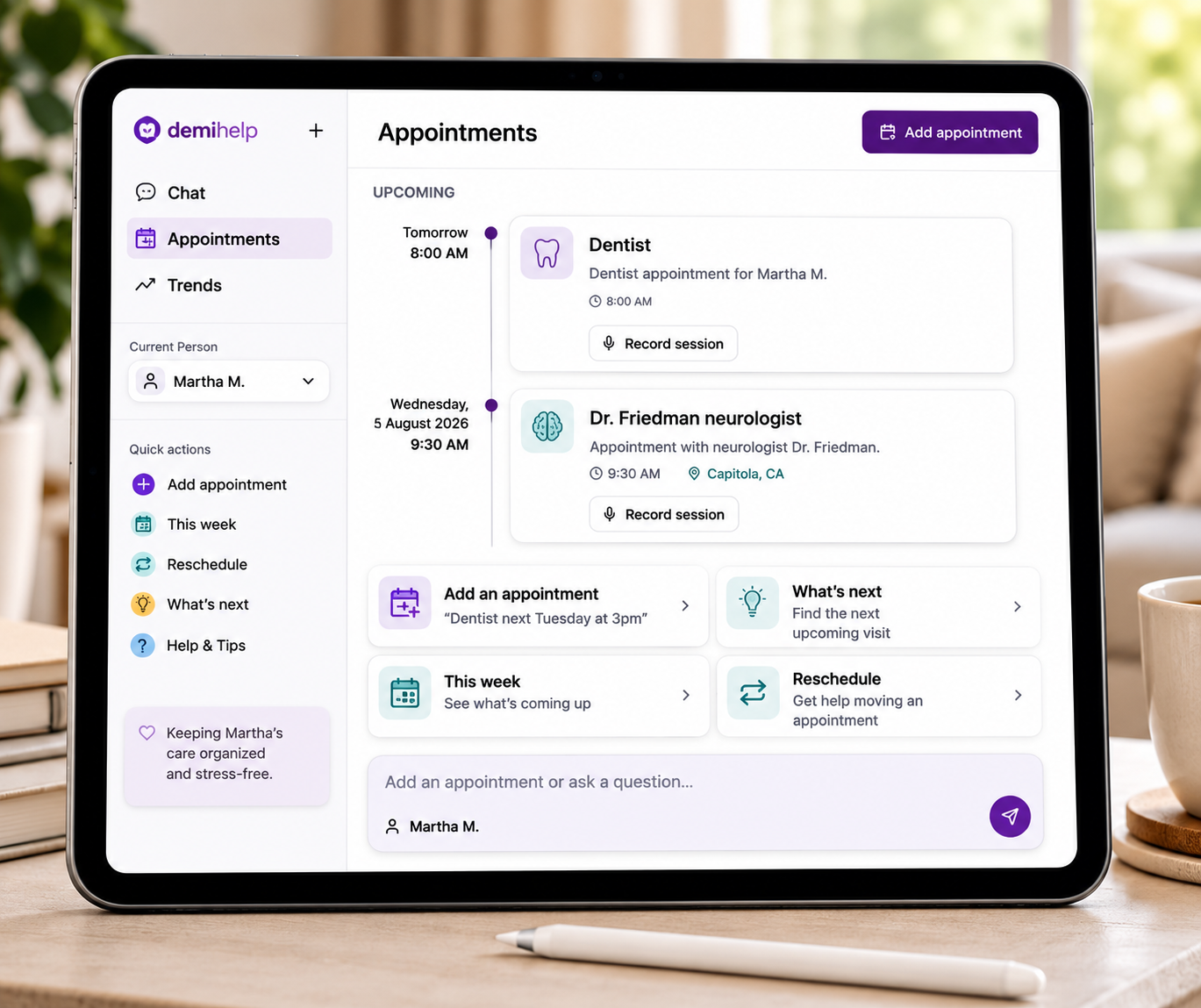
Appointment tracking keeps each care recipient’s schedule separate and confidential, so nothing falls through the cracks.
By tapping “add,” you can schedule a one-off or recurring visit, therapy session, or check-up with all the details. Simply type something like “Dentist, next Friday at two,” and we will add it to the timeline for you. You can also ask, “When is my next appointment?”
Watch & learn
Short videos walking through the chat and how caregivers use it day-to-day.
Meet DemiHelp and see how the chat works in real moments of care.
A closer look at how the interactive chat supports caregivers day-to-day.
Step-by-step guide to getting the most out of the DemiHelp chat.
See how caregivers use DemiHelp to navigate real care situations.
Real caregiver experiences
Learn how family caregivers and healthcare professionals are using DemiHelp to reduce caregiver burden, improve communication, and provide more personalized dementia care.
Explains how personalized guidance supports caregivers during difficult moments.
“DemiHelp meets you where you are and helps you respond with confidence, not guesswork.”
Describes why caregivers need practical support available in real time.
“Caregivers need answers in the moment, and DemiHelp gives them exactly that.”
Highlights how understanding behaviors helps caregivers respond more effectively.
“Understanding why a behavior happens changes how you care for the person you love.”
Explains how DemiHelp helps caregivers understand dementia behaviors and provides practical, easy-to-use support when they need it most.
“They offer suggestions that are very viable and very practical solutions.”
Discusses how DemiHelp's AI not only answers questions, but offers follow-up questions and suggestions that help guide the next steps.
“It combines organization, flexibility, and compassionate AI support in a way that can genuinely make daily caregiving easier.”
Details the app's ability to answer questions with specific answers and valuable suggestions for caregiving.
“[DemiHelp's] answers were very easy to understand, very consistent. They offered very good suggestions for what caregivers could do in certain situations.”
Describes the value of hands-free voice activation and its impact on caregiving.
“As a caregiver, I don't always have free hands to sit there and type. So being able to talk naturally with the AI made the experience feel much more practical.”
“The place for appointments will enable us not to miss any appointments and it's great. I love the trends. It also helps me keep track of events of episodes. Great work.”
“I think DemiHelp is an ingenious tool for caregivers. My partner has Lewy Body Dementia and this tool allows me to track my partner's symptoms, follow his medications and stay prepared for doctor's visits. DemiHelp is very plugged into the world of caregiving and this shows with the app.”
“I liked the caregiver scenarios and the information to help better understand ways to engage in activities and improve communication. I like the trigger signs of what to look out for when my mom gets mad, and ways to diffuse the situation. The information was better than the pamphlet I was given from home health care.”
“It works really well!”
“It was very insightful. Already have new ideas! Thanks!”
“It's a great resource and I appreciate the chance to explore it.”
“The tool is informative.”
“The care chat is super interactive and an amazing platform — it would help track progress and adapt to situations easily!”
“It is very good!”
Featured caregiver answer
Learn why dementia can disrupt sleep and how caregivers can make nights safer, establish calming routines, and recognize when sleep changes need medical attention.
Quick answer
Dementia can affect the brain systems that regulate sleep and wakefulness. A person may wake frequently, sleep more during the day, become confused about the time, or experience increased restlessness in the late afternoon or evening. A regular daily schedule, exposure to daylight, suitable daytime activity, shorter or earlier naps when appropriate, a calming bedtime routine, and nightlights may help. If sleep problems persist or change significantly, contact the person's healthcare professional to check for other possible causes.
More caregiver answers
Recommended reading
Patti Davis
Reminds caregivers to stay open and not be trapped by past decisions or judgments.
Nancy Pearce
Practical strategies for connecting with your care recipient.
Lisa Marshall
A heartfelt journey of caring for a partner with early-onset dementia.
Cathie Borrie
Seven years of trials, tribulations, and love caring for her mother.
Dr. Jane Mahakian & Alyson Kuhn
If you are struggling with how to communicate with someone with dementia, this book is for you.
Caregiver Resources
Community
Featuring Usha Tewari
Founder | Ask About Care
Founder | The Caregiving Leader
A Caregiver Health Social Enterprise
Saturday, November 7, 2026 · 12:00 PM ET
Join Ask About Care and our Caregiver Health Champions on Saturday, November 7 at 12 PM ET for a free virtual conversation about how caregiving affects our health.
Hear personal experiences, practical wellness tips, and why caregiver health needs to be part of the healthcare conversation.
Free event | Everyone is welcome
Are you a current or former caregiver? Please take a few minutes to complete Ask About Care's Caregiver Health Survey.
Your experience can help us advocate for better recognition of caregiver health in healthcare.
Please share with other caregivers.